Is ECU tuning legal
in Victoria?
The complete 2026 guide to ECU tuning laws in Victoria: EPA Act 2017, Australian Design Rules, VSI 8, VASS and the RG240 emissions test. What is legal, what is grey, what gets you defected. Written by a VicRoads-approved emissions tester.

Tuned by Apex Workshop
VicRoads-approved RG240 testers · Epping, VIC
TL;DR · the four-bullet answer
ECU tuning is legal in Victoria, provided the vehicle still meets the Australian Design Rule (ADR) emissions and noise standards it was built to.
Factory-spec performance tunes that keep the catalyst, DPF, EGR and lambda sensors intact are generally fine for road use.
DPF, EGR or catalytic-converter deletes on a road-registered car are illegal under the Environment Protection Act 2017 (Vic), with fines up to $9,000+ per offence.
Modified vehicles need a VASS engineering certificate, and most need an RG240 emissions test to prove ADR compliance before they can be re-registered.
01 · The short answer
Yes —
with conditions.
ECU tuning is legal in Victoria, provided the vehicle still meets the Australian Design Rule (ADR) emissions and noise standards it was built to.
That sentence is the entire law in one line. Everything else in this article is just unpacking what it actually means for the kind of car you drive.
The Victorian framework does not regulate tuning as an activity. It regulates outcomes: pollution levels, noise levels, on-board-diagnostic integrity. A perfectly tuned Stage 1 Golf R that keeps the factory catalyst, downpipe and exhaust intact is just as legal as the stock car. A diesel Hilux with the DPF cut out is not, regardless of how well it is tuned.
The rest of this guide walks through which laws apply, the difference between legal, grey and illegal modifications, the RG240 emissions pathway that gets a modified car re-registered, and what actually happens if a Highway Patrol officer or EPA officer pulls you over.
02 · The legal framework
Four laws that
actually apply.
You will see endless forum threads citing imaginary regulations. Here are the four documents that real Victorian enforcement actually works from, and what each one is for.
Environment Protection Act 2017 (Vic)
EPA Vic: sections 162, 165 & 166
Governs vehicle emissions and prohibits tampering with pollution-control devices. The Act gives EPA Victoria authority to fine drivers, owners and workshops for excessive smoke, removed catalysts, DPF deletes and aftermarket exhausts that exceed noise/emission limits.
Road Safety (Vehicles) Regulations 2021
VicRoads: Schedule 8 modifications
Lists which modifications need engineering approval and which can be made within the “Light Vehicle Modification” framework. Any change that affects emissions, fuel system, ECU calibration or driveline must be VASS-certified to remain road legal.
Australian Design Rules (ADRs)
Commonwealth: ADR 79, 80, 83 & relatives
Set the emissions, noise and on-board-diagnostic standards your car was originally built to. A tune is legal only if the vehicle still meets the ADRs that applied on its date of manufacture. The RG240 dyno test is what proves it.
VSI 8: Guide to Modifications
Transport Victoria
The plain-English bulletin Victorian signatories work from. Tells you which modifications need a VASS engineer, which need an emissions test, and which are off-the-table for road use. ECU calibration changes that alter emissions characteristics fall squarely inside VSI 8.
The single common thread
None of these laws ban tuning.
All of them ban tuning that exceeds the ADR your car was built to.
03 · The green zone
What is
clearly legal.
The huge, unambiguous middle of the tuning market, and where most enthusiast builds sit when they are done properly.
Custom dyno tunes on a stock emissions system
Re-mapping fuel, ignition and boost on a car that retains its factory catalyst, DPF, EGR, lambda sensors and OEM exhaust system. The vehicle still passes ADR limits, so there is nothing in the EPA Act that prohibits a better-calibrated map.
Performance packages within ADR limits
Stage 1-style remaps that stay within OEM emissions and noise envelopes are accepted under VSI 8 without VASS certification on most modern vehicles. Workshop records and a dyno sheet are still wise insurance.
Off-road, competition or club-permit vehicles
Track-only cars, competition vehicles and CPS (club-permit-scheme) builds operate under different rules. Deletes, race fuels and standalone ECUs are permitted when the car is not registered for full road use. Document everything; your insurer will ask.
Tuner-supplied calibration with VASS sign-off
Larger turbos, supporting mods, exhaust upgrades and standalone ECUs are legal when paired with an engineering certificate (VASS) and, if emissions characteristics changed, an RG240 pass certificate.
04 · The grey zone
Where most
tunes actually
live.
Most off-the-shelf flashes and e-tune workflows are not built for Victorian compliance; they are built for power and drivability on whatever drive cycle their developer used. That does not make them illegal, but it does mean the burden of proving they stay inside ADRs falls on you.
Off-the-shelf ECU flashes (Bootmod3, MHD, COBB, EcuTek)
Legal in concept, risky in practice. Many off-the-shelf maps assume 98 RON, delete catalyst monitoring or push timing that pushes the car outside ADR emissions on a sustained drive cycle. We tune them on the dyno to keep them inside compliance.
E-tunes & remote calibration
A datalog-and-email workflow can produce a perfectly legal map, but most e-tunes never see a five-gas analyser. Without dyno verification on a loaded cycle, you cannot prove the calibration still meets ADRs, and that is what EPA enforcement asks for.
Piggyback boxes (JB4, RaceChip, DTUK, Steinbauer)
They modify signals downstream of the OEM ECU. Detection by a dealer is straightforward; in Victoria, the unit itself is not illegal, but a piggyback that causes the car to exceed ADR emissions or noise is. Insurance disclosure is also mandatory.
Tunes that disable monitors but keep hardware
A map that turns off the catalyst-efficiency monitor while the cat physically stays in the exhaust is still a defeat-device under EPA Victoria interpretation. Same with DPF differential-pressure tables zeroed out: the hardware presence is not enough on its own.
05 · The red zone
What gets you
a defect notice.
These are the EPA Victoria enforcement priorities. Every item below is a clear, prosecutable offence on a road-registered vehicle. We see the consequences in our workshop every month.
DPF delete on a road-registered diesel
Removal of the diesel particulate filter on a road car is explicitly illegal under EPA Vic enforcement. Penalties: workshop fines up to $9,000+ per offence, driver fines, defect notice, mandatory reinstatement before re-registration.
EGR delete / blanking
Same legal classification as DPF removal. Both are pollution-control devices under the EP Act. EGR coolers fail constantly on European diesels; the lawful fix is replacement, not deletion.
Catalytic-converter removal or test-pipe
Operating a registered petrol car without its OEM catalyst is illegal. High-flow cat replacements are fine; gutted cats or straight-pipes are not. The five-gas analyser will see it instantly.
Lambda / O₂ sensor delete
Removing or fooling the oxygen sensors disables closed-loop fuelling and the on-board emissions diagnostic. Counts as tampering with a pollution-control device.
Excessive-noise exhaust
A perfectly tuned engine in a 95 dB(A) straight-piped car is still illegal. Noise limits apply alongside emissions limits, and both have to be met.
The diesel ute story
The most common defect notice in Victoria is a deleted DPF on a tuned diesel ute.
Ranger PX/Next-Gen, Hilux N80, Triton MR, D-Max RG: the outback build that runs perfectly off-road is the same build that loses its rego when Highway Patrol checks for emissions hardware. The path back: full reinstatement, a fresh calibration, and the RG240 pathway.
06 · The legal pathway
How to make a
modified car legal.
The Victorian Assessment Signatory Scheme (VASS) is the route every serious modified car eventually has to take. Done in the right order, it is straightforward; done out of order, it can mean retuning, reinstating hardware, or paying for the same test twice.
Plan the build with a VASS signatory
Before you spend a cent on hardware, talk to a Victorian VASS engineer. They tell you which mods need approval, which need an RG240, and which are off the table for your model year and category.
Tune on a five-gas analyser dyno
Calibrate the map for power, drivability and emissions in the same session. A live five-gas analyser confirms the tune still passes ADR limits before the car ever sees the road.
Pass the RG240 cycle
Required for modified vehicles, imports and individually constructed cars in Victoria. A 240-second loaded-mode dyno test that proves the vehicle meets the ADRs that apply to it. Same-day certificate on a pass.
VASS certificate & modification plate
Hand the emissions certificate, dyno sheet and build documentation to your VASS signatory. They issue the VASS approval certificate and modification plate that lets VicRoads complete registration.
Why we exist
Steps 2 and 3 happen
under one roof at Apex.
We are one of the few VicRoads-approved RG240 testers in Melbourne that is also a full custom tuning workshop. If your car fails the cycle, we do not send you elsewhere; we open up the calibration and fix it in the same bay.
07 · What happens if you get caught
The actual
consequences.
A Highway Patrol officer, an EPA officer, or a roadside emissions check can each trigger the same chain of events. The fines are real and growing year-on-year, but the bigger problem is usually the insurance and re-registration cost.
EPA penalty: driver
Up to $1,900
Excessive smoke / removed pollution-control device
EPA penalty: workshop
$9,000+
Performing or selling defeat devices to road cars
Yellow / red defect notice
Re-register costs
Vehicle removed from the road until rectified & re-presented
Insurance
Claim refused
Undisclosed modifications void cover under most AU policies
The bigger cost most people miss
A defect notice does not just cost the fine; it costs the re-presentation fee, the reinstatement parts, the workshop time, the rego suspension and the loss of bonus on your insurance. A road-legal build done right the first time is almost always cheaper than the cleanup.
08 · Real examples
Six builds.
Three verdicts.
The combinations of car and modification that walk into our workshop every week, and which side of the line each one sits on under Victorian law.
VW Golf R MK7.5, daily
Stage 1 ECU flash, OEM downpipe with cat, OEM intake
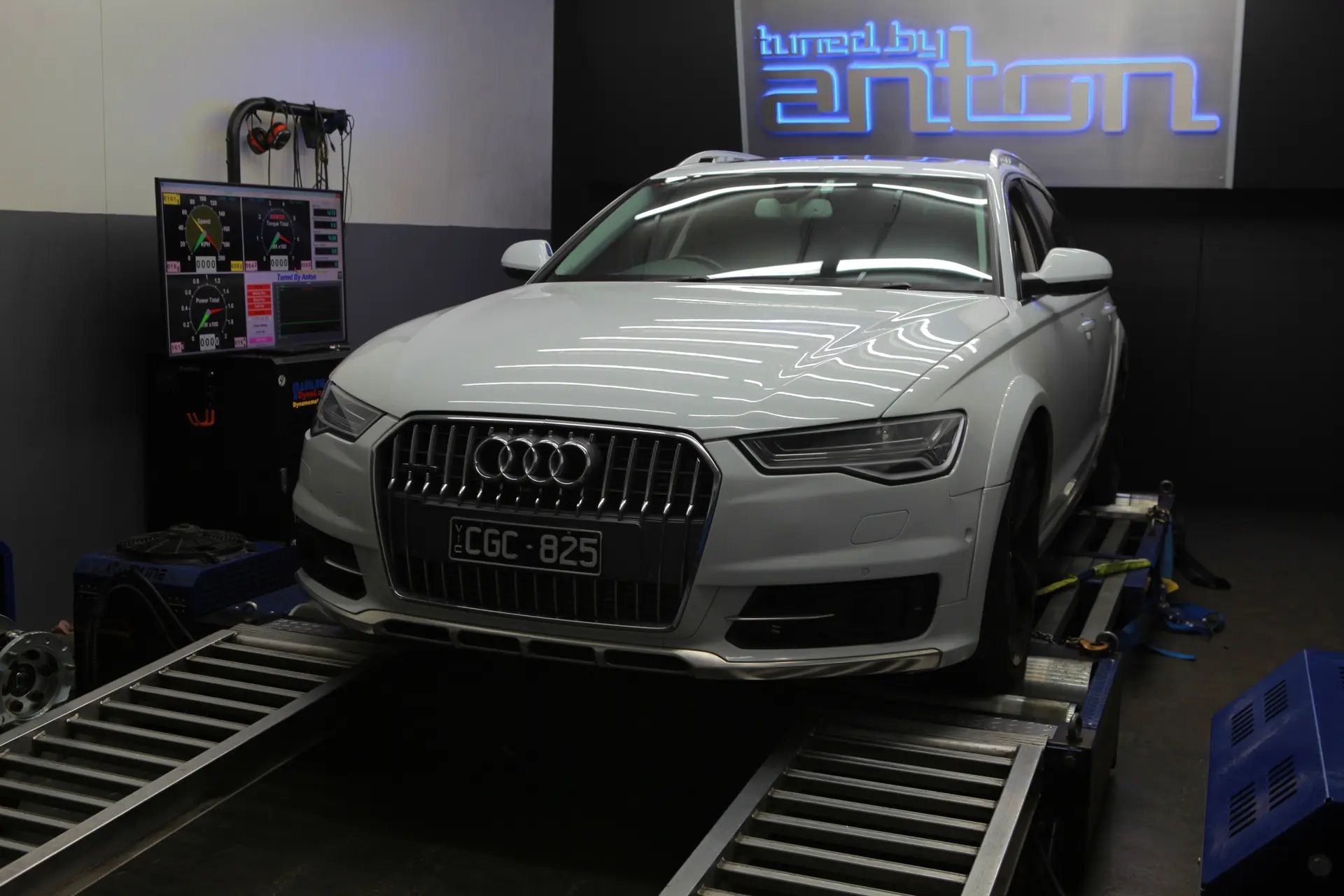
Catalyst intact, EA888 still inside ADR 79 limits, no noise exceedance. Document the tune in the service log and disclose to the insurer.
Ford Ranger PX3, road
Custom diesel tune, DPF delete, EGR blank, larger turbo
Two removed pollution-control devices on a registered road vehicle. EPA enforcement priority for Victorian diesels. Reinstate hardware, retune on the dyno, RG240 pass, then road-legal.
Audi RS3 8V, road
Stage 2 dyno tune, downpipe with 200-cell sport cat, intake
Sport cat is borderline; it can pass ADR if the tune is calibrated for it. We RG240 test these regularly; on a five-gas analyser they go through fine when the AFR is set conservatively.
Subaru WRX VA, daily
Custom flash, OEM exhaust system retained
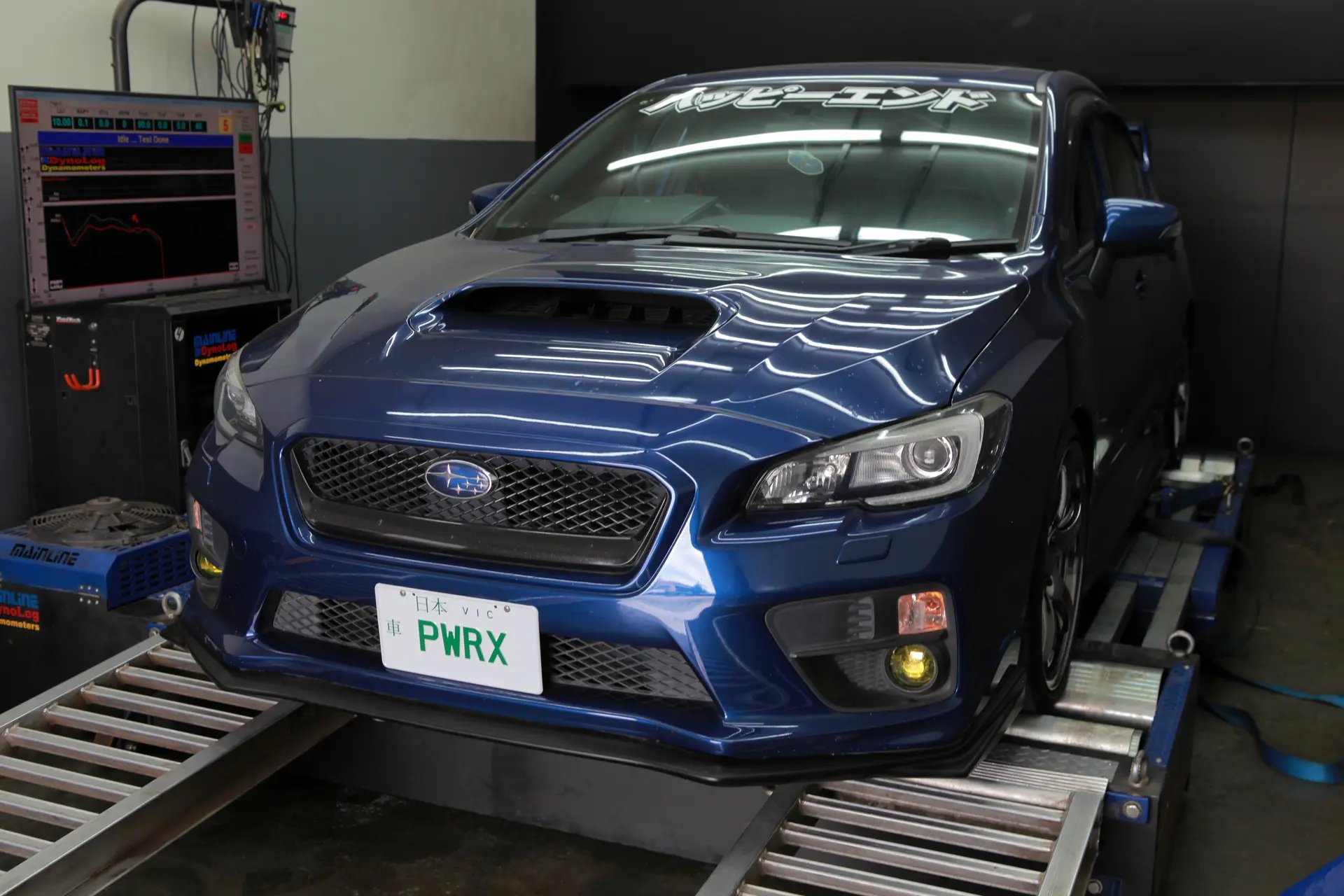
Closed-loop fuelling preserved, factory cats and lambda sensors all in place. A typical Stage 1 WRX flash is one of the cleanest road-legal upgrades you can do.
Nissan Patrol Y62, touring
Stage 1 calibration, OEM exhaust, no deletes
Petrol V8 with closed-loop emissions hardware untouched. ECU calibration alone, sitting well inside ADR 79/04 limits.
Toyota Hilux N80 2.8, road
DPF & EGR delete, custom tune, 3-inch exhaust no cat
The most common defect-notice scenario in Victoria. The fix is full reinstatement, a fresh calibration on the dyno, then the RG240 pathway to get back on the road.
09 · Frequently asked
The questions
we hear every week.
Need a hand?
Build it legal.
From day one.
We tune road-legal performance every week. Stage 1 flashes within ADR. VASS-pathway builds with the RG240 done in the same bay. Defect-notice rectifications turned around in days, not weeks.
9/21 View Rd, Epping VIC 3076 · Mon-Fri 8am–5pm